
Aberdare National Park, Kenya, stands as one of the country’s hallmark game parks. Located in Central Kenya, east of the Great Rift Valley, it covers an area of 767 square kilometers, extending across the higher elevations of the Aberdare Mountain Range. Though its altitude is a modest 18 to 29 meters above sea level, the park is famous for its lush, unique landscape and offers a remarkable safari destination with many attractions to explore.
Aberdare National Park boasts a dramatic and varied terrain, defined by deep ravines that cut across the slopes of the eastern and western forested mountain ranges. This unique environment is home to a diverse array of rare wildlife. The Park features dense bamboo forests, where you might spot species like the elusive bongo, lions, and the African golden cat. Additionally, the park protects black rhinos, along with leopards, baboons, Sykes’ monkeys, and the striking black and white colobus monkeys. Don’t miss the chance to see a massive, ancient Mugumo fig tree along the verdant Aberdare slopes, a landmark with a rich history best shared by local guides.
The ancient Mugumo fig tree in Aberdare National Park holds immense historical significance. The Kenyan Mau Mau freedom fighters ingeniously utilized the tree’s trunk crevices as an undisclosed “post office,” passing vital messages to their agents. This historic location lies in front of the area now known as the Kimathi Post Office, named after Field Marshal Dedan Kimathi, the Mau Mau leader and founder. Furthermore, the park is famous for its old caves, which provided essential hideouts for the freedom fighters during the Guerilla Revolution against the British colonial power.
Aberdare National Park boasts many astonishing natural features, including the prominent Kinangop Peak and Ol Donyo Lesatima Peak. Visitors can explore the vast moorlands, navigate the deep ravines and rugged terrains, and trek through thickets of bamboo forest. The Park is also home to several scenic waterfalls, such as Gura Falls, Karuru Falls, Chania Falls, and Magura Falls, fed by numerous streams.
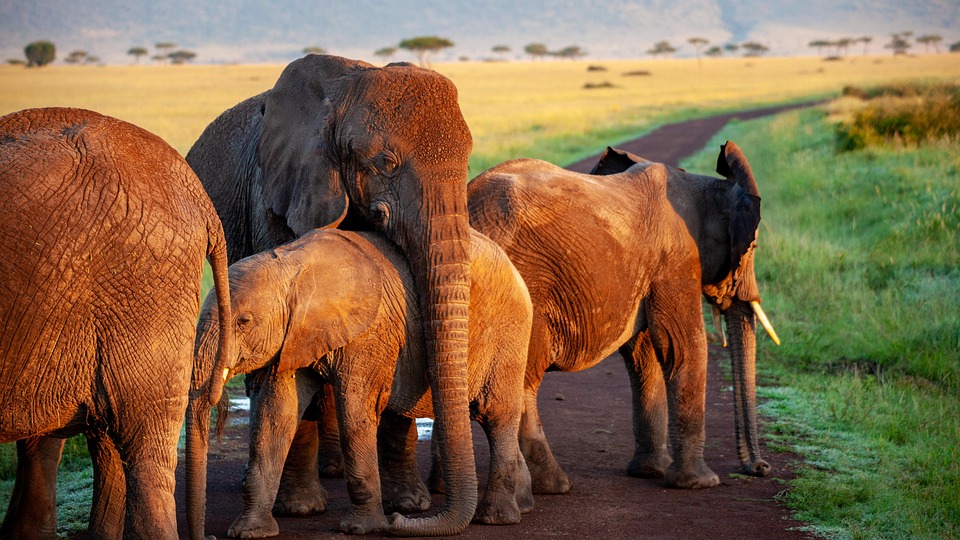
Aberdare National Park serves as a vital habitat for a diverse array of wildlife, including vast African elephant herds, huge forest hogs, warthogs, elands, wild dogs, red duiker, and the rare bongo antelope. The forests teem with primates like Colobus and Sykes’ monkeys, baboons, and Genets cats, alongside rich birdlife. Historically, the ranges were known as Nyandarua, but were renamed in 1884 to honor Lord Aberdare, the then-president of the Royal Geographic Society and an early explorer. The local Kikuyu people hold a deep reverence for the mountains, believing them to be sacred homes where their gods reside.
Attractions In Aberdare National Park
Wildlife in Aberdare national park
As a critical sanctuary for a significant population of rhinos and other endangered wildlife, Aberdare National Park stands out as one of Kenya’s most remarkable and vital conservation areas.
This premier game park is home to a wide, diverse population of wildlife, including the majestic elephant herds, buffaloes, and predators like lions and leopards. Visitors can also look for the elusive black rhinos, the rare bongo antelope, giant forest hogs, golden cats, and primates such as black and white colobus and Sykes’ monkeys.
The dense bamboo forest is a unique habitat, sheltering a variety of specialized wildlife. Visitors can find different antelope species, including waterbucks, duikers, bushbucks, and the rare suni. This area also supports eland, zebra, and herds of forest elephants.
The higher moorlands of the Aberdare Ranges provide a crucial habitat for a number of elephants and servals. Furthermore, the park’s salient area contains vital corridors used by elephants for migration. Aberdare National Park is also home to other notable species, including the giant forest hog and the large spotted genet.
Birdlife In Aberdare National Park
Aberdare National Park is a premier birding destination for enthusiasts, offering sightings deep within its rainforest and bamboo thickets. The best time for bird watching is during the months of November through April. To maximize your experience, birders are strongly recommended to carry a quality pair of binoculars.
Vegetation Cover In Aberdare National Park
Aberdare National Park’s landscape is characterized by stunning, diverse ecosystems, including moorlands, thick forests, bamboo forests, and vibrant rhododendrons. These habitats shelter an impressive array of wildlife: rhinos, elephants, leopards, buffaloes, hyenas, olive baboons, and various monkey species. You can also spot unique animals like giant forest hogs, civeet cats, duiker, giraffes, and various antelopes.
Beyond wildlife, Aberdare offers numerous attractions: the majestic Aberdare Ranges, spectacular waterfalls, the historic Mugumo fig tree, and fascinating cultural and historical sites linked to the local Kikuyu community.
Best Time To Visit Aberdare National Park
While Aberdare National Park is accessible year-round, the best time to visit for optimal game viewing is during the peak dry seasons: June to September and December to February. During these months, the savannah grass is short and sparse, offering clear, unobstructed views of the wildlife.
Wet season: Usually happens from the month of October May and March then April and May.
Where To Stay;
Aberdare National Park offers a perfect selection of accommodation, ensuring comfort for every visitor. Lodging options range from luxury, mid-range, and budget hotels to fantastic camping experiences. For those who love the outdoors, the park features several public campsites, including popular spots like Reedbucks, Shamata, and Wandaris.
How to Get To Aberdare National Park
Aberdare National Park is just 160 km (100 miles) north of Nairobi and is easily reached by road or air.
1. By Road (The Easiest Way)
Time: About 2.5 to 3 hours from Nairobi.
Route: Drive from Nairobi toward Nyeri or Nyahururu.
Best Gate (West): Use the Mutubio West Gate if you are traveling from Naivasha.
2. By Air (The Fastest Way)
Flights: Book flights from Wilson Airport (WIL) in Nairobi.
Landing: You land at nearby airstrips, primarily Mweiga or Nanyuki.
Transfer: A short road transfer takes you from the airstrip to your lodge or the park entrance.


