
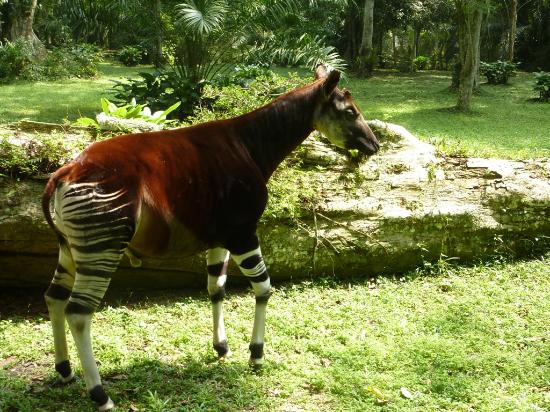
The Okapi Wildlife Reserve is a UNESCO World Heritage Site located in the dense Ituri rainforest of the northeastern Democratic Republic of the Congo. Established in 1992, it protects approximately one-fifth of the forest and is the primary sanctuary for the endangered Okapi (Okapia johnstoni), an elusive, zebra-striped relative of the giraffe and the country’s national symbol. The reserve also harbors exceptional biodiversity, including large populations of forest elephants, chimpanzees, and a high diversity of primates and birds, while safeguarding the traditional culture of the nomadic Mbuti and Efe Pygmies.
The Mbuti and Batwa Pygmies are ancient hunter-gatherer tribes that have inhabited the Ituri Forest for thousands of years. The Okapi Wildlife Reserve offers unique guided hikes, allowing you to immerse yourself in the culture of the Mbuti, see their life in the bush, and even participate in traditional activities like hunting.
Wildlife In Okapi
Despite regional instability, the Democratic Republic of Congo (DRC) boasts Africa’s highest wildlife diversity. It is the only place in the world to find rare and endemic species like the Okapi (Okapia johnstoni), Bonobos, Mountain Gorillas, and Eastern Lowland Gorillas. The Okapi, often called the ‘forest giraffe’ (a close relative of the giraffe), features striking zebra-like leg stripes. This mysterious mammal was first documented in 1901 at Virunga National Park. A significant population of approximately 5,000 Okapi lives within the Okapi Wildlife Reserve in the Ituri Forest, with others found in Virunga National Park.
Despite gaining protection in 1933, the Okapi has been reclassified as a threatened species by the Institute for the Conservation of Nature (ICCN). This heightened status reflects the significant 20-year decline in its population. Recognized as a national symbol of wildlife conservation by the Congolese government, the iconic Okapi appears on various national emblems.
The survival of the Okapi and other wildlife depends on the preservation of the reserve’s large, dense forest habitat. The primary dangers facing the Okapi and the entire reserve include: encroachment by migrants from densely populated Eastern Congo, widespread poaching for bushmeat, illegal logging, and illicit gold and coltan mining. Furthermore, the volatile political environment and shifting security situation in Eastern Congo severely hinder conservation efforts, as tragically demonstrated by the 2012 attack on the Epulu park offices, which resulted in the deaths of six people and thirteen Okapi, and the 2015 destruction of the Zunguluku guard post.
Attacks against the Okapi Wildlife Reserve are frequently conducted by armed gangs, often as retaliation against government forces and the Okapi Conservation Project (OCP) for their effective anti-poaching and anti-mining efforts. However, the most severe long-term threat to the reserve is human encroachment, driven by migrants moving into the area from other, overpopulated parts of the country. While indigenous Pygmy tribes have historically sustained a balance by taking only what they need, these new settlers are responsible for unsustainable deforestation and excessive bushmeat hunting.
The reserve experienced a dramatic drop in elephant numbers between 1996 and 1998, directly linked to rebel activity exploiting the lucrative Congo ivory trade. Deeply concerned about this plight, international conservation organizations intervened with significant funding to launch Operation Tango. This program aimed to suppress the illegal killing of elephants and bring protection to critical areas beyond the reach of the local authorities.
Operation Tango was highly successful in stabilizing the Okapi Wildlife Reserve, a condition that largely persists today. This effort underscored the reserve’s continued reliance on international conservation funding and support for its long-term survival. Key roles in this effort are consistently played by two vital organizations: the Okapi Conservation Project (OCP) and the Epulu Conservation and Research Center.
Safari Activities In The Okapi Wildlife Reserve
While the Okapi Wildlife Reserve is famous for its namesake, lucky visitors can expect truly fascinating wildlife experiences with a vast array of other animals. The reserve is home to many iconic and rare species, including Chimpanzees, Leopards, Elephants, Forest Buffalos, Giant Pangolins, Golden Cats, and various antelopes (like Pygmy Antelopes and Water Chevrotains). Other species you may encounter include Forest Genets, Anubis Baboons, and African Dwarf Crocodile.
Bird Watching
The Okapi Wildlife Reserve stands out as one of the premier birdwatching locations in the Democratic Republic of Congo (DRC). Documented as home to 370 bird species, the reserve offers fantastic sightings of various avian life, most notably numerous species of Vultures and Herons.
Experiencing Other Cultures With The Pygmies
If a safari isn’t complete without meeting Africa’s native populations, the Okapi Wildlife Reserve is the perfect destination. Here, you can encounter the Mbuti and Efe Pygmies. Like the Batwa of Uganda, these distinctively shorter tribes have maintained a purely traditional, millennia-old hunter-gatherer existence in the Ituri Forest, largely separate from the modern influence experienced by their Bantu neighbors.
The Pygmy tribes of the Okapi Wildlife Reserve practice a sustainable, traditional hunter-gatherer lifestyle within the Ituri Forest. When not hunting, they forage for forest products like honey, insects, seeds, fungus, and various plants, demonstrating expert knowledge of medicinal and edible flora. Unlike the Batwa Pygmies who were displaced for gorilla conservation, the Mbuti and Efe continue to thrive here. Their deep respect for the forest and its people has facilitated successful conservation partnerships that allow them to maintain their ancestral way of life.
The Bantu and Pygmy communities have a long history of peaceful coexistence, marked by a mutually beneficial lifestyle. These groups traditionally maintain a balanced diet, consuming less starch like rice and relying more heavily on game meat sourced through hunting.
When approved by park officials, the Pygmies offer visitors a unique, guided trip deep into the bush to track animals and birds. They specialize in finding sought-after game like antelopes and monkeys, demonstrating traditional hunting techniques using bows, arrows, and fiber nets for catching fish. This authentic experience offers an unparalleled look at their ancestral skills.
The most effective way to locate the elusive, rare Okapi is by tracking alongside the Pygmies, who utilize their generations-old knowledge of the forest. They are masters at deciphering subtle clues left on the ground—analyzing tracks and markings to identify specific animals and plants. Following your Okapi search, you can visit the neighboring Bantu communities to compare their distinct lifestyles with that of the Pygmies.
Hikes In Nature
The Okapi Wildlife Reserve offers guided nature walks to access some of the forest’s most breathtaking scenery. Like many Democratic Republic of Congo (DRC) national parks, the reserve features vast, pristine wilderness areas that remain largely untouched by human activity and rarely explored by visitors, offering a truly unique adventure.
Many national parks and areas in the Democratic Republic of Congo (DRC), including the Okapi Wildlife Reserve, remain well-protected precisely because their remote locations and challenging road networks limit accessibility. While visiting the reserve, adventurers can explore the scenic Nepoko River or undertake a challenging climb up Mount Mbeya. The surrounding Ituri Forest also boasts some of the most beautiful and pristine streams imaginable.
Camping
For brave travellers seeking a truly unique experience, a trip to the remote Okapi Wildlife Reserve in the farthest reaches of Congo offers an adventure unlike the well-known African tourist spots. Camping along the beautiful Epulu River grants the rare chance to immerse yourself in the authentic, untouched African wilderness—a story you’ll be eager to share.
Things You Need To Know Before Going To The Okapi Wildlife Reserve
Currently, the Okapi Wildlife Reserve attracts a daring kind of traveler—those who understand that experiencing something truly new requires taking calculated risks. This includes the major decision to visit the Democratic Republic of Congo (DRC), despite the country’s negative media image and occasional reports of rebel activity or kidnapping. These tourists choose the reward of a unique adventure over common safety concern.
These daring tourists who visit the Democratic Republic of Congo (DRC) recognize that many residents and foreigners successfully navigate the environment. They operate based on a calculated risk: the chance of encountering major threats, such as an Ebola outbreak or a rebel attack, is statistically low. This minimal probability often leads adventurers to ask: why not take this widely accepted risk? Are you prepared to join the many who have successfully made this adventurous choice?
Best Time Of The Year To Go To Okapi Wildlife Reserve
You can begin your journey to the Okapi Wildlife Reserve at Isiro, Kisangani, or Beni, stopping at Epulu en route to the center. If driving from Beni or Kisangani, allocate a full day for both the outbound and return trips. During the wet season, a reliable 4×4 vehicle is essential. Tourists flying into the region via Kinshasa or Kigali (Rwanda) can book private flights from the airports in Bunia or Goma.
While park entry is free, accommodation is not provided upon arrival, so you must arrange your own lodging. The best place to stay is often the reserve center’s facility in Epulu, though room availability varies seasonally. Nearby options in the area include Plaza Hotel, Hotel Kisangani, Immo Bajje, Vuvuke Guest House, and Immo Bajje Close.