
Bwindi Impenetrable National Park
Bwindi Impenetrable National Park is an undisputed highlight of a safari to Uganda. This popular Ugandan national park covers an area of about 321km2. It protects a magnificent range of forested hills on the edge of the Albertine Rift Valley in the southwest of Uganda.
It was gazetted a national park in 1991 and declared a World Heritage Site in 1994 on account of its exceptional biodiversity.
Bwindi National Park is home to over 120 mammal and 350 bird species. The main attraction of Bwindi is the opportunity to track the wild gorillas on foot.
Bwindi is home to nearly 50% of the world’s population of mountain gorillas. That equates to around 500 individuals, according to the last official census of 2019, with 24 gorilla families currently habituated for tourism, more than in any other area of Africa.
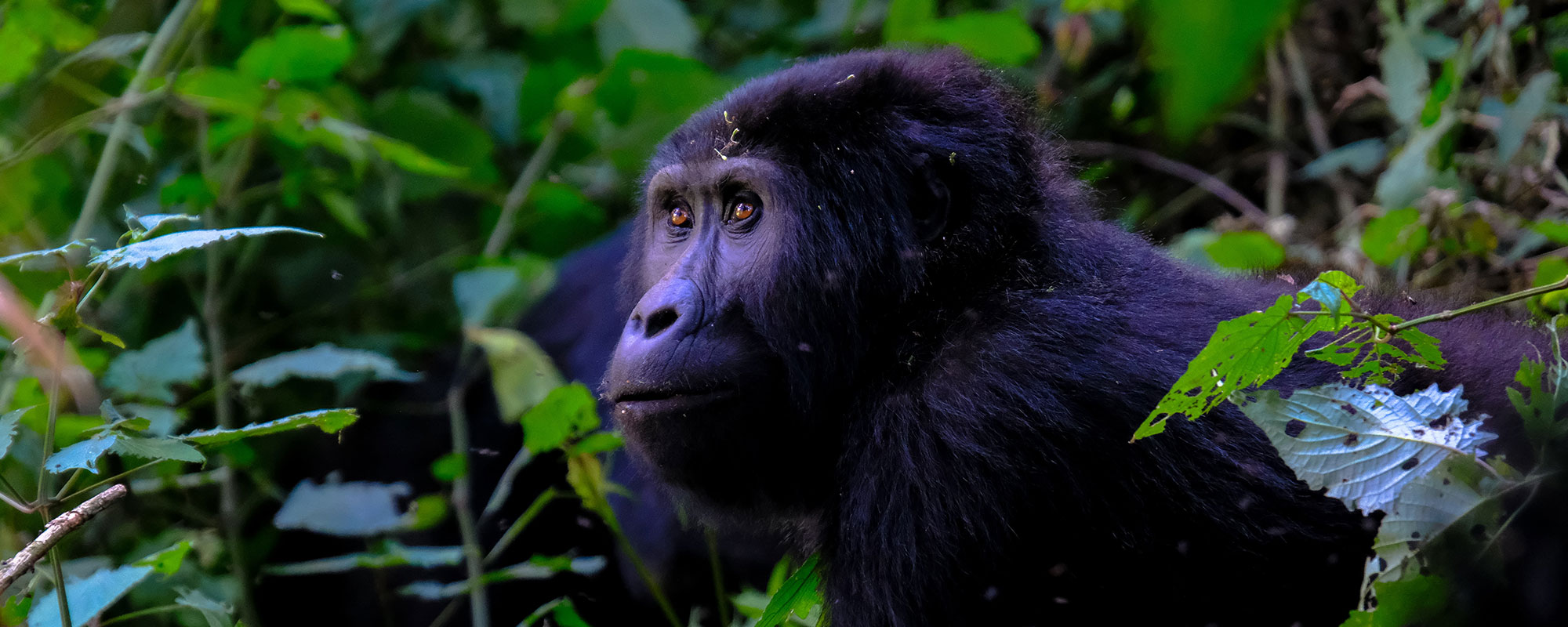
Even if Bwindi Impenetrable National Park was not home to the Mountain Gorillas, its remoteness and enthralling natural beauty would attract visitors.
But it is those magnificent apes that have made Bwindi Impenetrable National Park Uganda’s most important tourist destination.
No other wildlife encounter can rival sitting with endangered gorillas in their natural habitat and observing the fascinating family dynamics of some of our closest cousins.
Gorilla Trekking In Bwindi Impenetrable National Park
In Uganda’s Bwindi Impenetrable National Park, gorilla trekking can be organized for a fraction of what it is charged in neighboring Rwanda, making one of Africa’s greatest and most expensive wildlife experiences more accessible. A Uganda Gorilla Permit costs USD$800, and a Rwanda gorilla trekking permit costs US$1,500.
Departing early in the morning after briefing, you embark on a guided trek into the forest in search of one of 24 habituated Gorilla families in Bwindi
the visits are led by local park ranger guides, and groups of 8 visitors are allowed to observe the gorillas for 1 hour, in silence and at a safe distance. It is relatively hard work to reach the gorillas. You should be prepared for a round of walking of about 2 to 7 hours through a challenging terrain of steep ridges and valleys.
The appropriately named Bwindi Impenetrable Forest is only accessible on foot. There are no paths, no signs, no directions—and more often than not, no clearings (which is why the guides carry machetes). The good news, however, is that the reward more than outweighs the effort.
Detailed Gorilla Trekking Guide in Uganda
Gorilla habituation
Gorillas are not always gentle in the presence of humans. It takes time and effort to achieve this relaxed attitude in a process known as habituation.
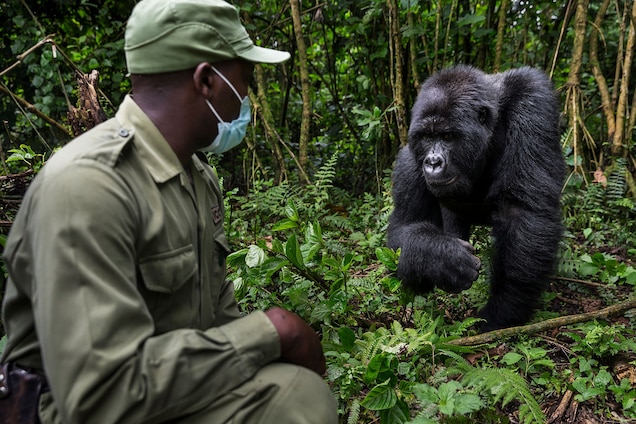
Bwindi Impenetrable National Park offers visitors a chance to take part in the gorilla habituation process by tracking a family of semi-habituated gorillas.
This opportunity costs $1,500 per person, but it is an intense and unforgettable experience, perfect for those who love gorillas and also have an interest in the work that goes on behind the scenes.
The gorilla habituation experience in Bwindi is even more limited in number than gorilla treks. It allows just a handful of visitors a day to accompany a team of specialists for 4 hours as they track and engage with gorillas that are not yet fully used to the presence of humans.
The 4 Gorilla trekking sectors of Bwindi
Habituated gorilla families in Bwindi Impenetrable National Park can be accessed from four sectors, named after the surrounding villages.
These include Buhoma, Ruhija, Nkuringo, and Rushaga. Each of these Bwindi sectors acts as a self-standing gorilla trekking destination, has its own set of accommodation options, gorilla families, level of difficulty, and is reached by a different approach from other locations.
- Buhoma Sector (Northern Bwindi)
Buhoma is the most accessible and visited region of Bwindi Impenetrable National Park.
It is also the largest of the 4 gorilla trekking sectors of the park and has the highest density of luxury Bwindi safari lodges and camps.
As the first area of the park to open to guests, this is where Bwindi gorilla trekking tours first started, when the Mubare gorilla family was habituated to the presence of humans in 1993.
None of the original members of this family are still around — some died in fights or from natural causes, others joined other wild troops and disappeared into the forest — but their 9 descendants are some of the most playful.
In the Buhoma Sector of Bwindi National Park, you can also explore the neighboring communities on cultural tours, bird watch, or take a scenic hike on some of the most spectacular forest trails on the continent. And aside from the Mubare Gorilla Family, there are 5 other habituated gorilla families, including:
- Habinyanja Gorilla Family – 12 Members
- Rushegura Gorilla Family – 19 Members
- Katwe Gorilla Family – 9 Members
- Binyiindo Gorilla Family – 7 Members
- Muyambi Gorilla Family – 7 Members
- Ruhija Sector (Eastern Bwindi)
Ruhija is the second most visited sector of Bwindi. Ruhija sector is popular with bird watchers and avid hikers who for the summit of Rwamunyonyi Peak (“the hill of many birds”) – the park’s highest point, which offers extraordinary views.
In this sector, you can also take a cultural tour to the surrounding areas to meet some Batwa pygmy people – the original inhabitants of Bwindi Impenetrable Forest.
On offer are demonstrations of the use of medicinal plants found in the forest and other ancient survival skills practiced by their people for thousands of years.
Though forest elephant sightings in Bwindi Impenetrable National Park are infrequent, Ruhija provides the best chance of spotting one of these elusive grey ghosts. Ruhija is home to 4 habituated gorilla families, including:
- Bitukura Gorilla Family – 13 Members
- Oruzogo Gorilla Family – 10 Members
- Kyaguliro Gorilla Family – 4 Members
- Mukiza Gorilla Family – 15 Members
Rushaga sector(southern Bwindi)
The Rushaga is famed for its gorilla trekking and the gorilla habituation experience, where tourists spend up to 4 hours with the group rather than the standard 1 hour. The sector also includes Lake Mutanda, so visitors can set out on a boat cruise for an entirely different perspective of the spectacular scenery.
It is home to multiple habituated gorilla families in the region, including:
- Shongi Gorilla Family – 11 Members
- Kahungye Gorilla Family – 25 Members
- Bweza Gorilla Family – 15 Members
- Busingye Gorilla Family – 10 Members
- Bikingi Gorilla Family – 12 Members
- Mishaya Gorilla Family – 9 Members
- Mishaya Gorilla Family – 9 Members
- Mishaya Gorilla Family – 9 Members
- Rwigi Gorilla Family
- Tindatine Gorilla Family
4. Nkuringo Sector (Western Bwindi)
The Nkuringo sector is the most scenic area to visit in Bwindi Impenetrable National Park. The dramatic topography and breathtaking views of the volcanic Virunga Mountains do come at a physical cost; this particular region is better suited to more physically active visitors.
Nkuringo is home to four habituated gorilla families, including:
- Nkuringo Gorilla Family – 12 Members
- Bushaho Gorilla Family – 10 Members
- Christmas Gorilla Family – 9 Members
- Posho Gorilla Family
- green broadbill (Grauer’s broadbill).
Best Time To Visit Bwindi National Park?
You can visit Bwindi Impenetrable National Park at any time of the year.
People commonly come to Uganda for Bwindi gorilla trekking safaris, and sightings are pretty much guaranteed throughout the year.
However, June to August and December to February, which are the dry season months, offer the best conditions for gorilla trekking. In the wet season months, the trails tend to be more slippery and harder to hike.
Getting there
You can get to Bwindi Impenetrable National Park by road or air. If you are planning a road trip to Bwindi, the journey takes approximately 8 to 9 hours from Kampala or Entebbe.
The drive to and from Kampala may be long, but very interesting for those who are adventurous and love nature. Travelling by air is the fastest way to reach Bwindi, and there are a number of flights each day.